Marrakech: a guide for the unhurried traveler.
Where to base yourself, what genuinely deserves your time, and the practical details that separate a lovely trip from a tiring one.
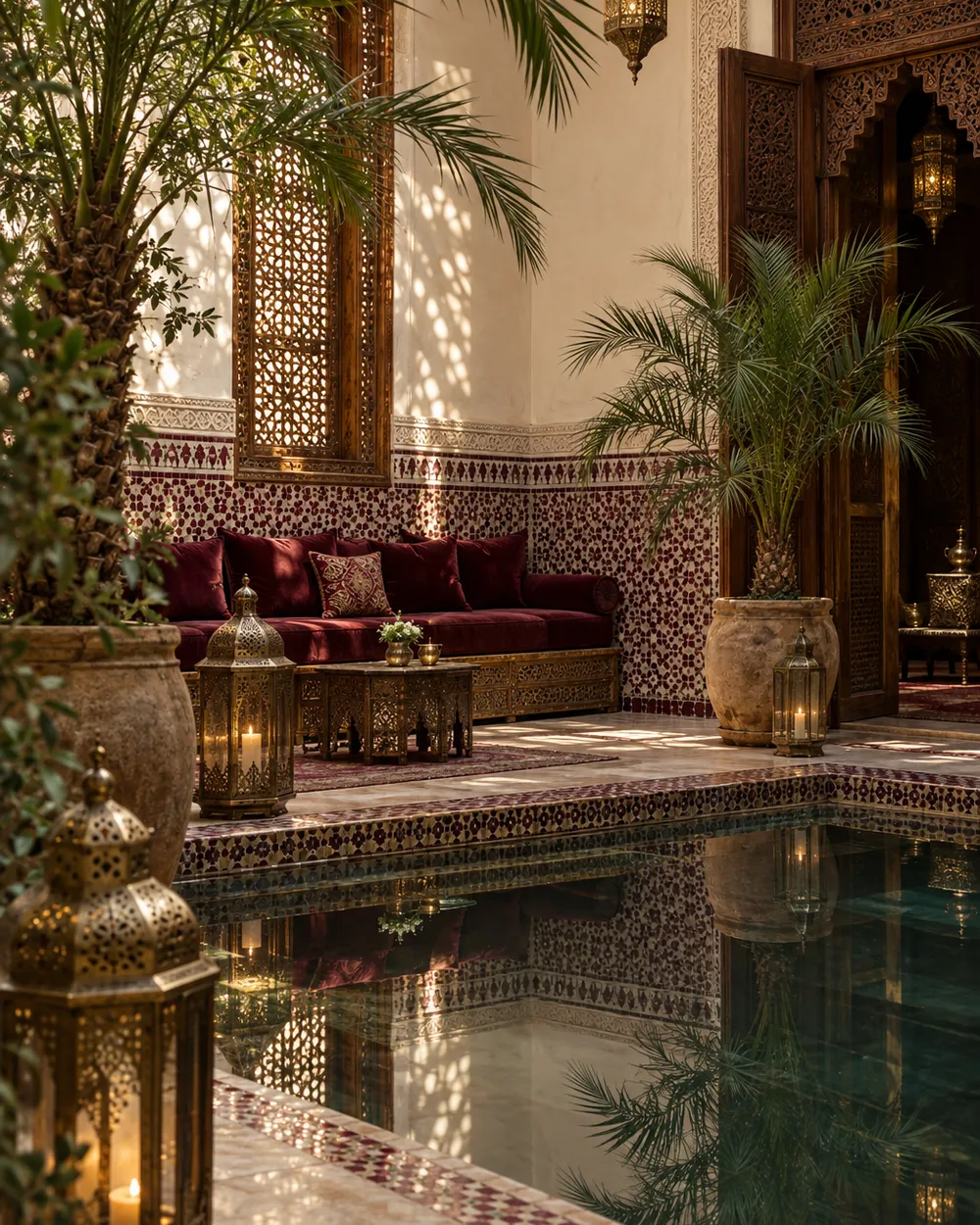
Marrakech does not ease you in. You step through an unmarked door in a wall the color of dust and find a courtyard with a fountain, orange trees and absolute silence. That contrast — noise then hush, heat then cool, chaos then order — is the entire pleasure of the city.
It is also why so many people come back exhausted. Marrakech rewards travelers who plan the rhythm of their days rather than the contents of them. Two things in the morning. Nothing at all in the afternoon. Something beautiful at dusk. Follow that and the city will be generous with you.
Where to base yourself
The choice of neighborhood matters more here than the choice of hotel.
The Medina
Stay inside the old walled city and you wake inside the story — the call to prayer, the carts, the smell of cedar and charcoal. A riad here means a traditional courtyard house, usually a handful of rooms, often a rooftop for breakfast. The trade-off is access: taxis stop at the gates and the final stretch is on foot through lanes no map fully explains. Arrange an arrival escort in advance; every good riad offers one.
Guéliz
The modern quarter, laid out in the French period, with broad streets, galleries, good restaurants and hotels that have lifts and space. Choose this if you want a bed you can drive to, or if this is your first visit and you would like a soft landing.
The Palmeraie or the outskirts
Palm groves and walled garden hotels twenty minutes out. Silence, pools, and a real sense of retreat — but you will be taking taxis for everything. Best as the second half of a longer stay, once the Medina has had its way with you.
What is worth your time
Jemaa el-Fnaa, but at the right hour
The great square is a spectacle and a slight ordeal. Go at dusk, when the food stalls are lighting up and the heat has broken, and watch it from a terrace above before you walk through it. Keep your bag closed and your pace steady.
The souks, with a plan
Enter from the northern edge of the square and let yourself get lost for an hour, then leave. Prices are negotiated, always, and warmly — it is a conversation, not a contest. Decide what a thing is worth to you before you ask.
Jardin Majorelle and the Yves Saint Laurent museum
That famous cobalt blue is worth the crowds, and the two sit side by side, so do them together and go early. Tickets are best booked ahead.
The Bahia Palace and Ben Youssef Madrasa
If you see only one piece of architecture, make it the madrasa: a courtyard of carved cedar, stucco and tilework so precise it reorganizes your idea of decoration. The Bahia Palace is larger, later, and full of light.
A hammam, properly
Not a spa treatment — a ritual. Black soap, a scrub that is franker than you expect, and then an hour of feeling entirely new. Book one for the afternoon of your second day and watch what it does to the rest of the trip.
The Atlas Mountains
An hour and a half from the city and a different world: Berber villages, terraced fields, walnut trees and cold rivers. The Ourika Valley is the easy day trip; Imlil is for walkers. Go with a driver, leave early, and eat lunch on somebody’s terrace.
The best day I have had in Marrakech involved no sights at all. A rooftop, a pot of mint tea, and four hours of watching the light move down a wall.
Good to know
- When to go. March to May and September to November are the kind months. High summer is genuinely severe; midwinter days are lovely and the nights are cold.
- What to wear. Marrakech is relaxed about visitors but you will be more comfortable — and treated with more warmth — in loose clothing that covers shoulders and knees. Linen, a long skirt or wide trousers, a scarf for the sun. Shoes you can walk uneven ground in.
- Money. The dirham is a closed currency, so change on arrival. Cash still rules the Medina; cards are normal in Guéliz.
- Taxis. Agree the fare before you get in, or ask your riad what the journey should cost.
- Guides. One good licensed guide for a half day early in your stay will change how confidently you move for the rest of it. Your riad will arrange it.
- Pace. Three full days is enough to love it. Five, with an afternoon in the mountains and nothing scheduled after two o’clock, is close to perfect.
How I would spend four days
Day one. Arrive, do nothing, eat on the roof, sleep. Day two. Guided morning in the Medina, hammam in the afternoon, dusk at the square. Day three. Majorelle and the museum early, long lunch in Guéliz, a gallery, dinner somewhere with a courtyard. Day four. The Atlas Mountains, back by six, and one last rooftop.
More from the journal

Postcards from the road, once a month.
New destinations, honest notes on where I stayed, and the occasional thing I loved enough to tell you about. One letter a month — never more.
Your address stays private. Unsubscribe any time.